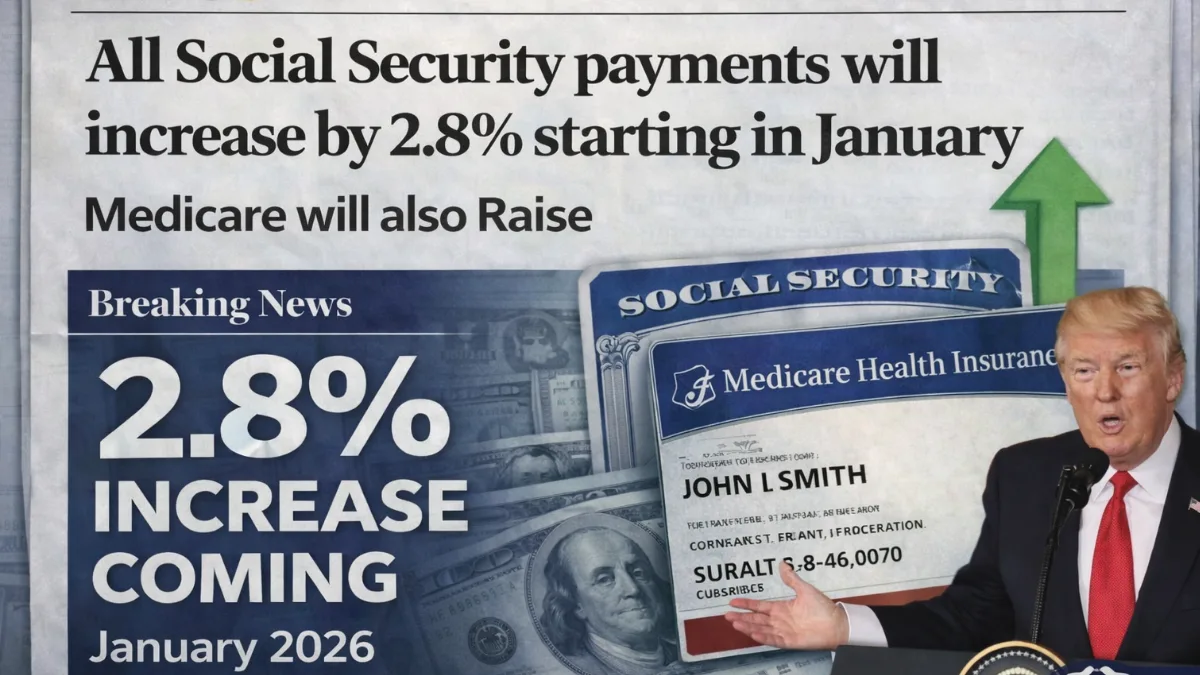
A persistent rumor is gaining traction across social media and financial forums: the promise of a $2,000 federal deposit arriving in American bank accounts in January 2026. This claim has sparked both hope and confusion among millions. However, it is critical to separate speculative online chatter from confirmed federal policy. As of now, there is no official legislation, executive action, or announcement from the U.S. Treasury or IRS authorizing such a universal payment for January 2026. Understanding the nature of this rumor and the legitimate payments actually scheduled is essential for sound financial planning.
Deconstructing the Source of the $2,000 Rumor
This specific rumor appears to be a blend of recycled news, misinterpretation, and speculation. It likely stems from three main sources: First, historical precedent from the 2020-2021 Economic Impact Payments (stimulus checks). Second, proposed legislation in Congress that has discussed one-time tax credits or rebates, though none have passed into law for 2026. Third, the annual Cost-of-Living Adjustment (COLA) for Social Security, which increases monthly checks by a percentage—not a flat $2,000 lump sum—each January. These distinct concepts are often erroneously combined in viral posts to create the illusion of an imminent, large-scale payout.



Legitimate Federal Payments Scheduled for Early 2026
While a new $2,000 stimulus is not on the official calendar, several important federal payments are confirmed for early 2026. These include:
· Increased Social Security and SSI Checks: Starting with January 2026 payments, benefits will reflect the annual COLA increase (expected to be announced in Fall 2025).
· Potential Advanced Child Tax Credit (CTC) Payments: If Congress renews the expanded CTC with monthly advance payments, these would resume in January. However, these are based on income and the number of qualifying children, and would not be a flat $2,000 sum for all.
· Early Tax Refunds: For those who file their 2025 tax returns immediately when the season opens in late January, the fastest refunds could arrive via direct deposit in early-to-mid February 2026.
How to Verify Any Unexpected Federal Payment
Should an unexpected deposit appear in your account, it is imperative to verify its legitimacy before accessing the funds. The only authoritative sources for verification are:
- Your IRS Online Account: Log in at IRS.gov to review your official tax transcript for any recorded credits or refunds.
- Official .gov Websites: Check IRS.gov and Treasury.gov for press releases. Do not rely on news aggregator sites or social media.
- Your Bank: They can provide details on the originator of the direct deposit.
If you cannot confirm the source through these channels, treat the deposit as suspect.
The Real Path for a Federal Stimulus Payment
For a widespread $2,000 payment to become reality, a clear legislative process must be followed. A bill detailing the payment’s funding, eligibility (likely based on 2024 or 2025 Adjusted Gross Income), and distribution method would need to pass both the House and Senate and be signed by the President. This is a public, contentious process that takes considerable time and media coverage. The IRS would then issue multiple public guidance notices and launch tracking tools, as it has with previous stimulus rounds. The current absence of this very public process is the strongest indicator that the January 2026 rumor is premature at best.
Protecting Yourself from Misinformation and Scams
Rumors of free money are a potent lure for scammers. Be on highest alert for phishing attempts via phone, text, or email that claim you must “sign up,” “verify your identity,” or pay a “small fee” to receive this $2,000 deposit. The federal government will never contact you in this manner to initiate a payment. Your best defense is a combination of skepticism and reliance on official information. Plan your budget around your confirmed income and benefits, not viral promises. By focusing on authoritative sources, you protect both your finances and your personal information from exploitation.