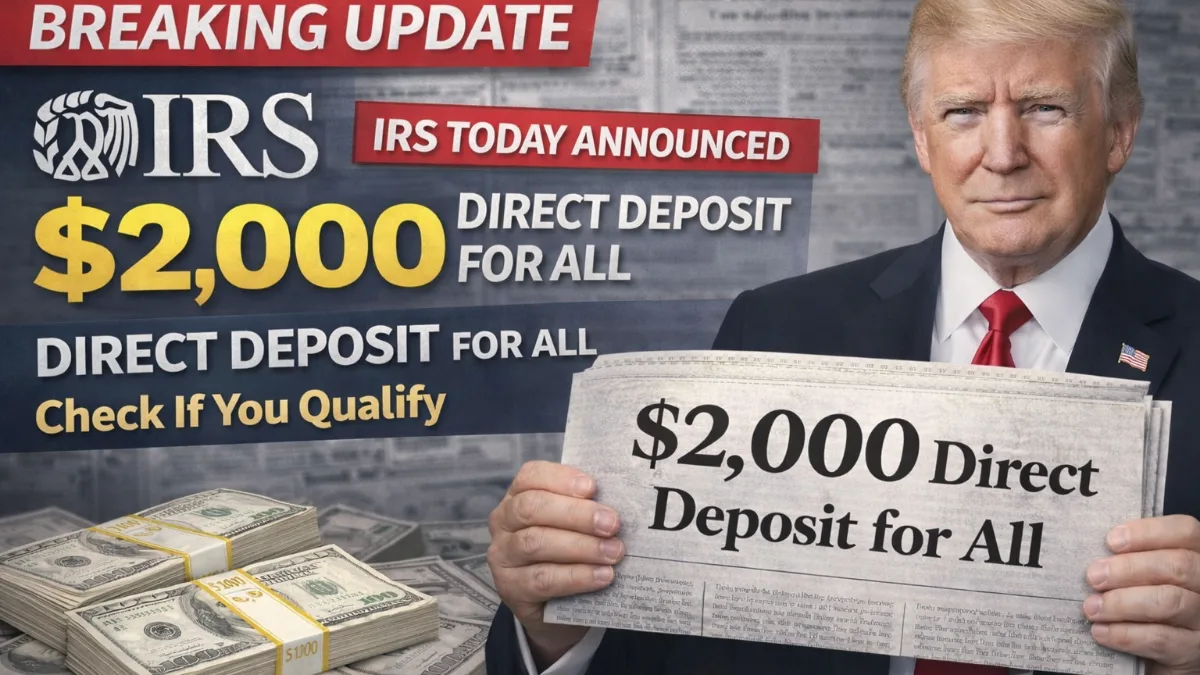
A surge of reports and social media buzz in early January 2026 claims that a $2,000 direct deposit** from the IRS has unexpectedly landed in thousands of bank accounts. While such a windfall would be a significant financial event, it is crucial to approach this news with immediate caution and verification. As of now, **there is no officially announced, universal $2,000 IRS stimulus or rebate payment for January 2026. Before making any financial decisions based on this deposit, you must first identify its true source to avoid potential scams or the serious consequences of spending money that is not rightfully yours.
Immediate Steps to Identify an Unknown Deposit
If you discover an unexpected $2,000 deposit labeled with descriptors like “IRS TREAS 310” or “TAX REFUND,” do not spend it. Your first action should be to log into your official IRS online account at IRS.gov. In your account transcript, you can verify if this corresponds to a legitimate refund, credit, or adjustment for the 2024 or 2025 tax years. Simultaneously, check with your state’s Department of Revenue website. Several states have issued one-time surplus rebates or inflation relief checks in recent months, and a delayed payment from such a program is a plausible explanation for a $2,000 sum.

The Most Likely Legitimate Explanations
This deposit is far more likely to be a result of standard tax processing or state action than a new federal stimulus. The most probable sources are:
- An Early or Adjusted Tax Refund: The IRS may have processed your 2025 tax return extremely early, or you may have received a corrected refund from a prior year.
- A State Tax Rebate: States like California, Minnesota, and others have previously issued middle-class rebates in this amount. Your state may have launched a new program.
- A Delayed 2024 Refund or Credit: If you experienced delays with your 2024 return, this could be its resolution.
High Alert for Sophisticated “Accidental Deposit” Scams
This situation is a classic setup for an advance-fee or “clawback” scam. Scammers, aware of the viral rumors, may use stolen data to fraudulently deposit money into accounts (a form of “money mule” activity) or simply hope you believe a real deposit is an error. Shortly after the deposit appears, you may receive a call, text, or email from someone pretending to be from the IRS or your bank. They will claim the deposit was a “mistake” and demand you urgently return the funds via wire transfer, gift cards, or cryptocurrency to avoid penalties or arrest. This is entirely fraudulent. The real IRS has legal procedures to reclaim erroneous payments and will never make urgent, threatening demands for immediate repayment.
Your Official Verification and Action Protocol
Follow this official protocol to protect yourself:
- Verify: Use only official tools: IRS.gov and your state’s .gov revenue site.
- Contact Your Bank: Inform your bank’s fraud department of the unexplained deposit. They can initiate a trace on the funds and provide guidance.
- Do Not Engage: Ignore and report any unsolicited communication demanding you return the money.
- Hold the Funds: Keep the $2,000 untouched in your account until its origin is definitively proven. Spending funds that are later deemed to be an error can leave you liable for the full amount.
The Bottom Line: Trust Official Channels, Not Viral Rumors
While the prospect of an unannounced $2,000 payment is compelling, the absence of official legislation or an IRS announcement makes it highly suspect. In today’s digital landscape, financial misinformation spreads rapidly. Your financial security depends on deliberate verification through authoritative government portals, not social media posts. Treat any unexpected deposit as a serious matter requiring investigation, not a stroke of luck. By pausing, verifying, and following official procedures, you safeguard yourself from both fraud and significant financial liability.